January 2026
When I started Optioneer, I had one goal: build the options tracker I couldn't find anywhere else. Not another bloated platform with features I'd never use. Not another Excel template that breaks after three trades. Just a clean, accurate tool that shows me what I need to see.
If you actively trade options — not just buy calls occasionally — this post is for you.
This post is a transparent look at what we've shipped recently, the decisions behind each feature, and where we're headed next.
The Problem We're Solving
If you've traded options for any length of time, you've probably experienced the frustration:
Spreadsheet chaos — You start with a simple tracking sheet. Then you add formulas for P&L. Then Greeks. Then multi-leg support. Before long, you have a fragile monster that breaks whenever you look at it wrong.
Separate views — Positions, portfolio exposure, realized results, and unrealized gains or losses can be difficult to follow when they are spread across different views.
Choosing a workflow — Different platforms serve different needs. My focus for Optioneer is portfolio tracking and analysis for retail options traders.
Optioneer exists because retail traders deserve better. We deserve tools that respect our intelligence without demanding our entire paycheck.
What We've Shipped Recently
Let me walk you through the improvements we've made and why each one matters.
Multi-Leg Strategy Support
Real traders don't just buy calls — they trade Iron Condors, Butterflies, Calendar Spreads, and complex multi-leg positions.
- Predefined strategy types include:
- Beginner: Long Call, Long Put, Covered Call, Protective Put, Cash Secured Put
- Intermediate: Bull Call Spread, Bear Put Spread, Iron Condor, Iron Butterfly, Long Straddle, Long Strangle
- Advanced: Calendar Spread, Diagonal Spread, Ratio Spread, Butterfly Spread, Collar, Short Straddle, Short Strangle
Each strategy tracks legs correctly, aggregates Greeks at the strategy level, and calculates P&L the way it should be calculated.
Why this matters: When you enter an Iron Condor, you want to see how the entire position is performing — not four disconnected legs that you have to mentally combine.

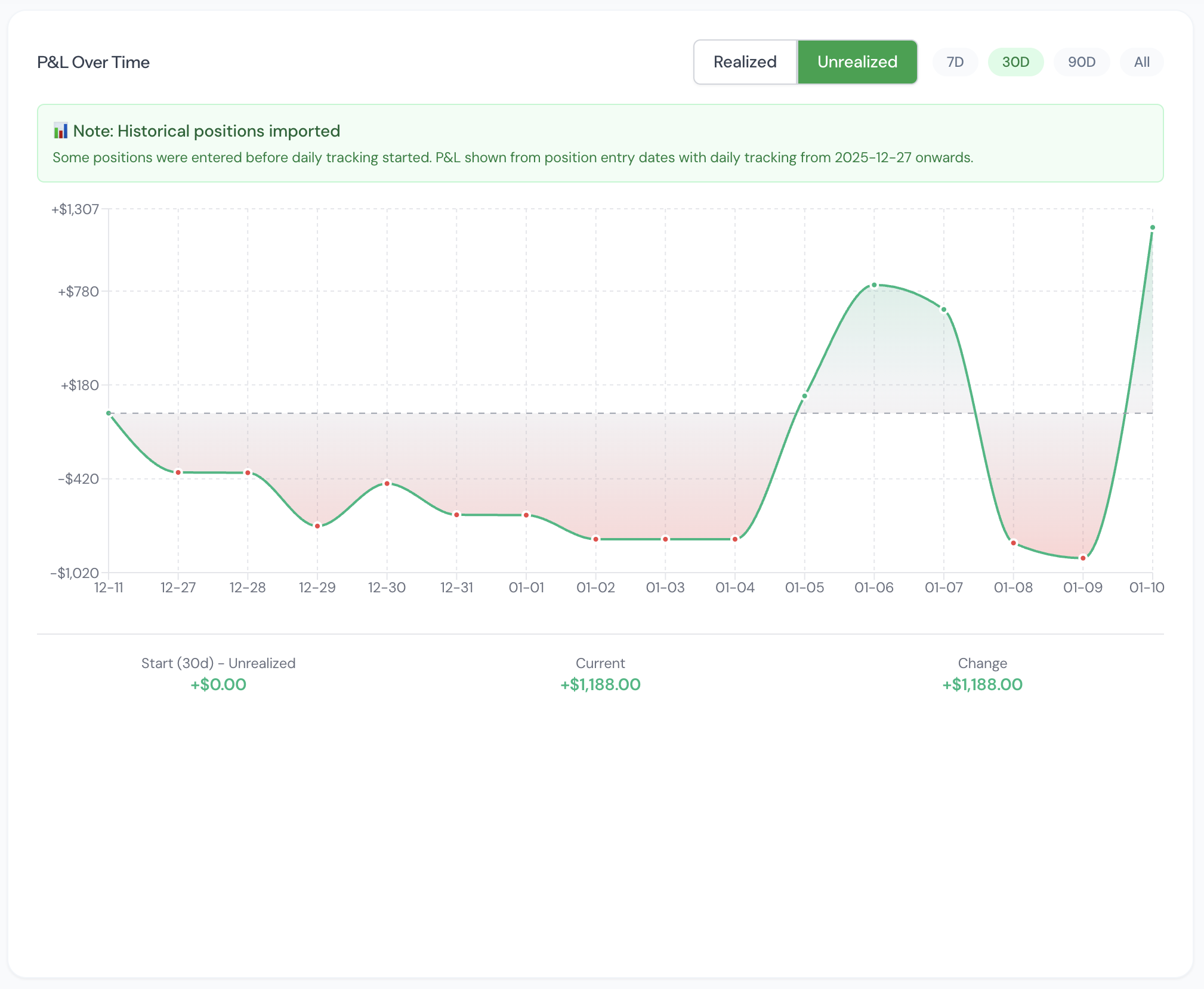
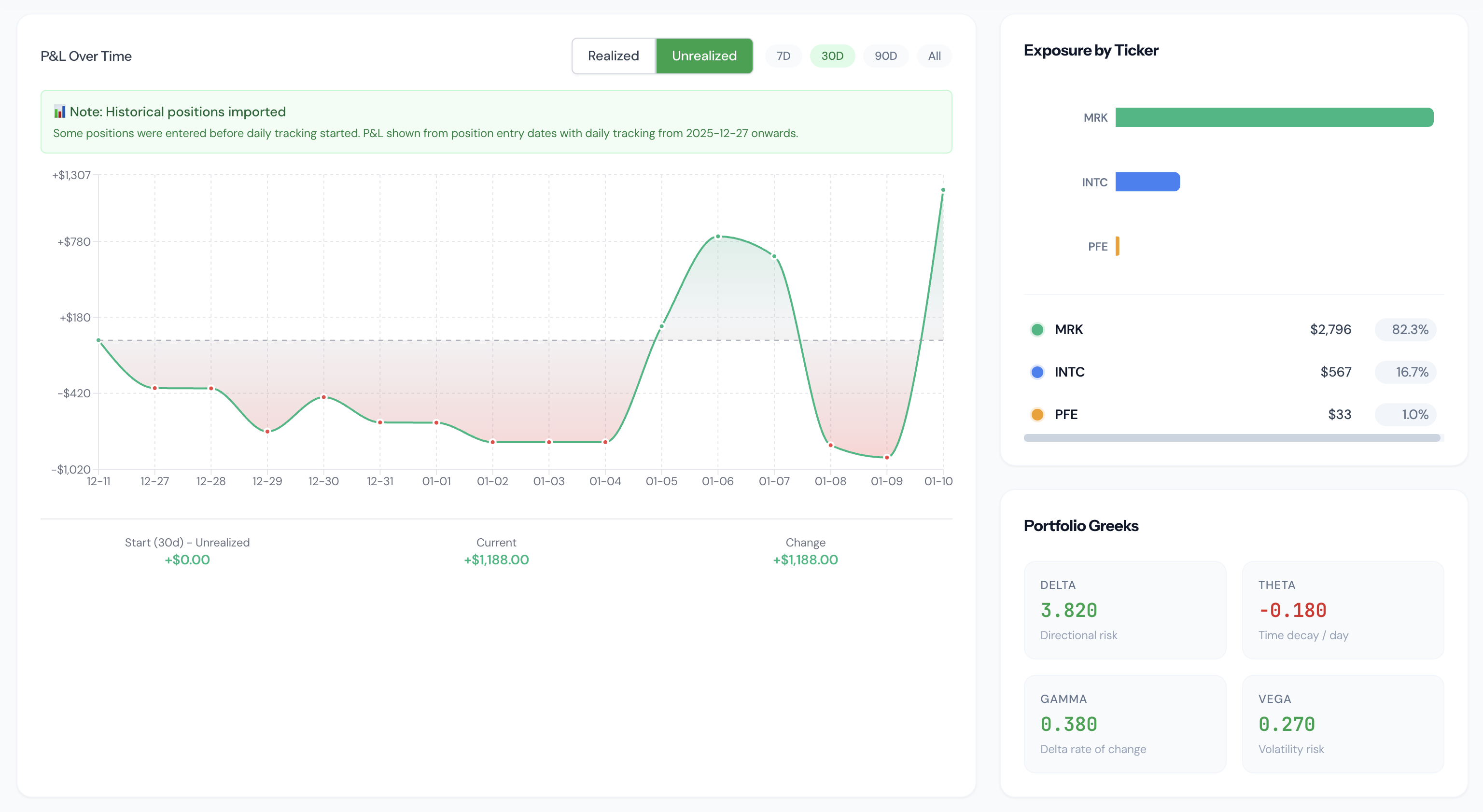
Accurate Realized vs. Unrealized P&L
Premium cash flow and trading profit measure different things.
Your P&L has two components: 1. Realized P&L: Gains or losses when a position closes or expires, accounting for opening and closing amounts and applicable costs. Assignment or exercise can create a stock transaction rather than a standalone realized option gain. 2. Unrealized P&L: Paper gains or losses on open positions
Receiving premium when selling an option is a cash inflow, not an immediate profit. The open obligation and any stock exposure still matter. A premium-adjusted economic basis used to evaluate a strategy is also distinct from tax cost basis; US tax treatment depends on how the option closes, expires, or is exercised.
Sources: OCC's Options Industry Council: What Is an Option? and IRS Publication 550: Puts and Calls.
Optioneer now clearly separates these. You see both numbers, and you understand your actual trading performance.
Why this matters: Accurate P&L tracking is the foundation of good trading. You can't improve what you can't measure correctly.
A Clear Premium Trial Model
We want Optioneer to be easy to try, but sustainable enough to keep improving. Without that structure, it is too easy for product quality, market data costs, and support to pull against each other.
- Here's our approach:
- Premium trial: Manual trade entry, portfolio dashboard, P&L tracking, Greeks, CSV export, and Premium tools during evaluation
- Premium ($19/mo or $150/year): Enhanced market data tools, smart alerts, CSV import from brokers, multiple portfolios, advanced analytics
Optioneer uses a Premium trial so you can evaluate the workflow before monthly or yearly billing begins. Premium adds convenience and depth for traders who want ongoing access.
Why this matters: We're building a sustainable business, not a growth-at-all-costs startup. Intentional limits mean we can keep the product improving for years to come.
You can try Optioneer and decide whether Premium fits your workflow. Get started here.
New Indicators: POP, EV, Risk, Liquidity, Score
Making good options trades requires more than just looking at premiums. We've added new indicators to help you evaluate opportunities:
- - POP (Probability of Profit): Statistical estimate of your trade finishing profitable
- EV (Expected Value): Average expected outcome based on probabilities and potential gains/losses
- Risk metrics: Quick assessment of position risk level
- Liquidity indicators: Bid-ask spread and volume signals
- Optioneer Score: Our composite metric that weighs multiple factors
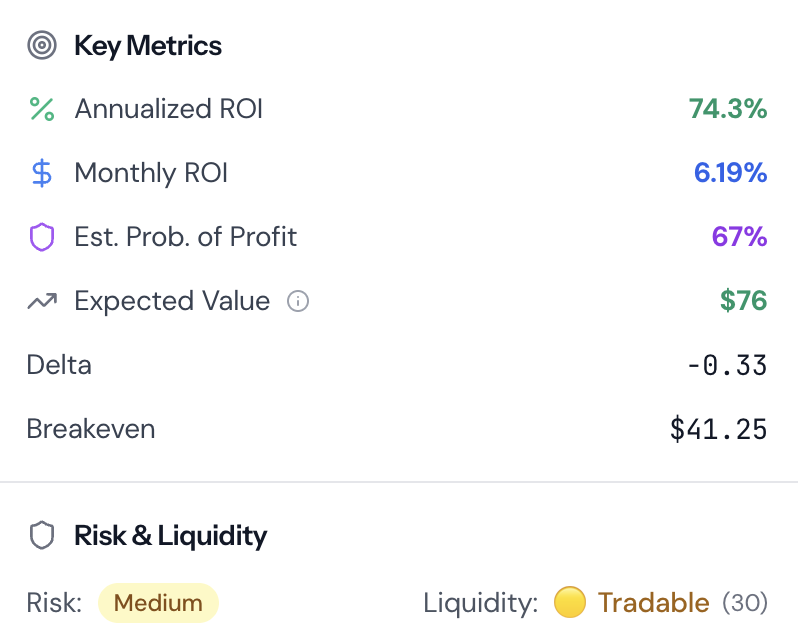
These show up in our Screener and Discovery pages, helping you filter available contracts.
Why this matters: These indicators provide additional estimates to consider alongside the risks and assumptions of a trade.
Screener & Discovery Improvements
- The Options Finder got a major upgrade. You can now:
- Search supported US stocks or ETFs
- Filter by expiration, DTE, delta, strike range
- See contract details instantly
- Add trades directly to your portfolio
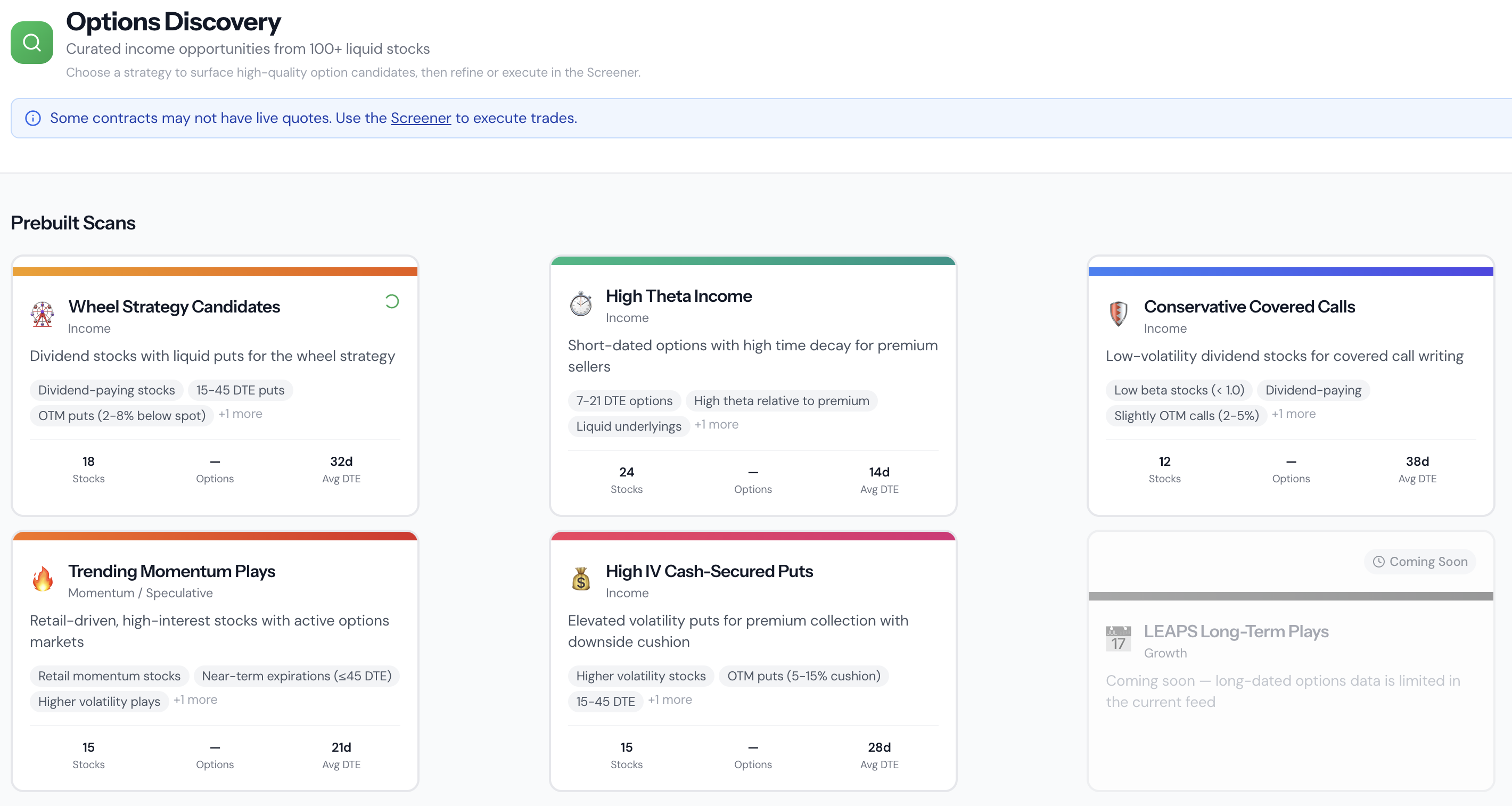
- For Premium users, Discovery Scans offer prebuilt multi-symbol searches:
- Wheel Candidates
- High Theta Income
- Conservative Covered Calls
- Trending Momentum
- High IV Puts
- LEAPS Long Term
Why this matters: Finding good trades shouldn't require a Bloomberg terminal. Optioneer makes discovery accessible.
Our Philosophy: Depth Over Breadth
You might notice we don't have every feature under the sun. No social trading. No crypto options. No AI chatbot giving you hot tips.
That's intentional.
We believe in depth over breadth. Our aim is to build focused tools that work well together. Every feature we ship should:
- Solve a real problem traders face today
- Work correctly the first time (or get fixed fast)
- Integrate seamlessly with the rest of the platform
This philosophy guides how we prioritize work. Calculations still depend on the data, assumptions, and trade records used.
What's Coming Next
We're not done. Here's what we're working on:
- - More strategy templates: Adding popular patterns based on user requests
- Enhanced portfolio analytics: Deeper insights into your trading patterns
- Mobile experience improvements: Better responsiveness for trading on the go
- Community-requested features: We read every piece of feedback
We Want Your Feedback
Feedback helps us decide which workflows to improve next.
If there's something we're missing, something that's not working right, or an idea that would make your trading life easier — we want to hear it.
Email us at support@optioneer.io or find me on Twitter @InvestJourneyX.
Let's build this together.
— Johnny Founder, Optioneer